The content and images in this curriculum and presentation are copyrighted and trademarked. Photographs’ subject matter is divided into categories. All photographs are by Zion Ozeri. You may only use the presentation or parts of it while implementing the DiverCity Lens in your school. For any other use, including reproduction, you must get special permission from Zion Ozeri. The use of the following content, which may be objectionable, is at your own risk, and Zion Ozeri holds no responsibility to evaluate the accuracy, completeness, and usefulness of any content provided, prior to your use. You may contact Zion Ozeri for any questions: zion@zionozeri.com
The Exodus from Egypt
Lesson Plan | Grades 7–12 | by Zion Ozeri and Josh Feinberg
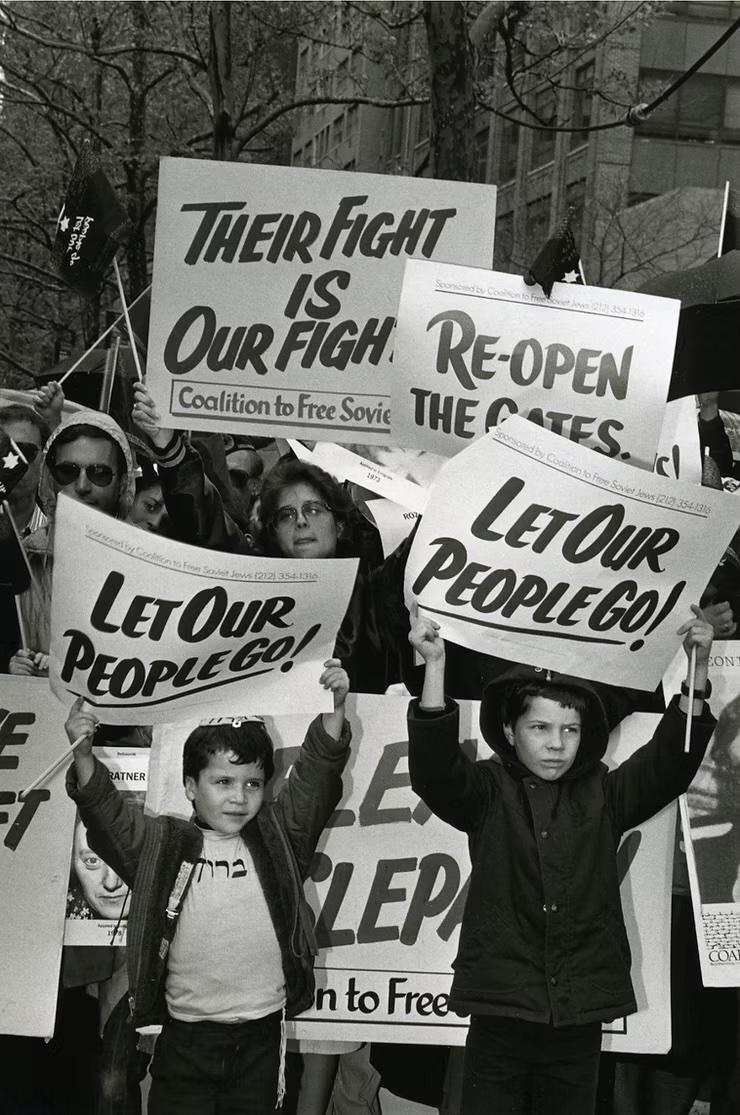
Let My People Go, New York City, USA, 19874
All images © Zion Ozeri. All Rights Reserved.
Opening
Before showing the photograph, ask students:
"If you found out that somewhere in the world right now, an entire group of people was banned from practicing their religion or leaving their country — would you do anything about it? What would actually get you to show up and protest?"
Take a few quick answers, then reveal the photograph.
Part 1: Reading the Photograph
Look closely at this photograph and discuss:
- What do you think is happening in this picture?
- What do the words on the signs suggest about this scene? What do you infer from the expressions on people's faces, or the way they're standing and holding their signs?
- Look specifically at the two boys in the foreground. Why do you think the photographer chose to frame the image around them, rather than the adults?
- This photograph was taken at a time when Jews in the Soviet Union were not allowed to practice their religion or immigrate to countries where they'd have religious freedom. How does that information impact your understanding of the photograph?
- One sign reads: "Their fight is our fight." Why do you think American Jews, many of whom had never even met a Soviet Jew, felt this was their fight too?
- Have you ever been to a protest or demonstration, or seen one on social media or TV? How did you feel seeing or being part of it?
- What causes do you feel strongly enough about that you would choose to protest for or against them?
Learn more about the Soviet Jewry movement:
Jews in America: Soviet Jewry Movement
How A Quest To Save Soviet Jews Changed The World : NPR
Life as a Refusenik | Jewish Women's Archive
History | THE REFUSENIK PROJECT
Part 2: The Text
Read the following text from Exodus, spoken shortly after the Israelites left Egypt.

Exodus 13:3
And Moses said to the people, Remember this day, on which you went free from Egypt, the house of bondage, how GOD freed you from it with a mighty hand: no leavened bread shall be eaten.
Discuss:
- This day is identified as a transformational moment: before, you were a slave — now, you're free. Have you ever had a transformational moment in your own life? What was it, and why did it matter?
- What aspects of leaving Egypt do you think are most important to remember, and why?
- You can remember something without changing what you eat. Why do you think Moses adds this specific detail about not eating leavened bread? What does turning memory into action accomplish that just "remembering" doesn't?
- No one alive today was present for this story. What does it mean to remember something you never actually experienced?
- How, if at all, does this story shape how you think about being Jewish today? Are there things that you would do, or not do, because of this story?
Listen to the following song: Louis Armstrong-Go Down Moses
As you listen, consider: this song was written and sung by enslaved Africans in America, who saw their own story reflected in the Exodus narrative. What does it mean that a story from thousands of years ago became a rallying cry for a completely different struggle for freedom, thousands of years later?
Part 3: Synthesis
Revisit the photograph and the text side by side.
- How does the Exodus text relate to the photograph? What's the connection between an ancient story and a 20th-century protest?
- How might this biblical story inspire action today? Where do you see its influence, consciously or not, in modern movements for freedom or justice?
- What does freedom mean to you? Has the meaning of that word changed over time for society or for you personally?
- What actually inspires you to take a stand for a cause? Is it a story, a person, an experience, something else?
Follow-Up Activities
1. Photograph a Cause
Take a photograph that reflects a cause you care deeply about. Find a text, traditional or contemporary, that supports your position. Present your work to the class and explain: Why does this matter to you? Who or what shaped the way you feel? What values frame your perspective?
2. Photograph Freedom
Take a photograph that represents what freedom means to you. Write a reflection: what does freedom mean, and how is that meaning reflected in your image?
3. Your Transformational Moment
Reflect on a specific, discrete moment that changed how you think, feel, or live. What happened? Why did it have such a powerful impact? How is your life different now? Do you see this as a change for the better or for the worse? Explain.