The content and images in this curriculum and presentation are copyrighted and trademarked. Photographs’ subject matter is divided into categories. All photographs are by Zion Ozeri. You may only use the presentation or parts of it while implementing the DiverCity Lens in your school. For any other use, including reproduction, you must get special permission from Zion Ozeri. The use of the following content, which may be objectionable, is at your own risk, and Zion Ozeri holds no responsibility to evaluate the accuracy, completeness, and usefulness of any content provided, prior to your use. You may contact Zion Ozeri for any questions: zion@zionozeri.com
First Temple Destruction and the Babylonian Exile
Lesson Plan | Grades 7–12 | by Zion Ozeri and Josh Feinberg
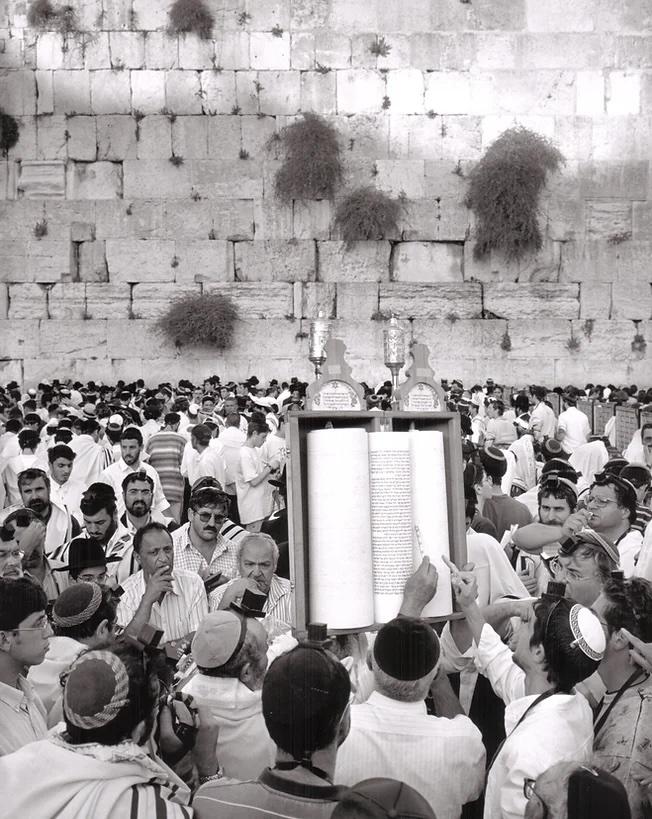
9th of Av at the Wall, Jerusalem, Israel, 1997
All images © Zion Ozeri. All Rights Reserved.
Opening
Before showing the photograph, ask students:
Imagine there is one place in the world where hundreds of thousands of people gather every year—not to celebrate, but to mourn something that happened nearly 2,000 years ago. What kind of event could inspire that level of commitment after so much time?
Take a few quick answers, then reveal the photograph.
Part 1: Reading the Photograph
Look closely at the photograph and discuss:
- Describe what you see in the photograph.
- Notice the shadow on the wall. What effect does the shadowy area have on the image?
- What elements draw your eye and focus your attention? What divides the image, and what centers it?
- How does the photograph make you feel? Is there anything in it that feels hopeful to you?
Tisha B'Av, the ninth day of the Hebrew month of Av, marks the two most tragic days in ancient Jewish history. On the same date, hundreds of years apart, the Temple in Jerusalem was destroyed, Jews were slaughtered and exiled, and the sovereignty of the Jewish people in the land was brought to an end: first by the Babylonian Empire in 587 BCE, and then, after the Temple was rebuilt by the returning exiles, again by the Roman Empire in 70 CE. Jews around the world observe Tisha BAv by fasting, praying, and recalling these events. It always falls during the hottest days of summer in Israel. The worshippers in this photograph have gathered to mark the day at the Western Wall, part of the retaining wall that once supported the foundation of the Second Temple.
Learn more here:
Tisha B'Av 101 | My Jewish Learning
The Temple and Its Destruction | My Jewish Learning
The Jewish Temples: The Babylonian Exile
Part II: The Text
This biblical verse from the Book of Lamentations was written following the destruction of the First Temple and the exile of the Jewish population.

Lamentations 1:16
This is why I weep and my eyes overflow with tears. No one is near to comfort me, no one to restore my spirit. My children are destitute because the enemy has prevailed.
- Describe the feelings expressed by the writer. What specific imagery is used to convey them?
- Does this verse resonate with you today? Why or why not?
- What places or objects are most important to you? How would you feel if they were taken away?
- How does this verse relate to the photograph above?
Listen
- Bob Marley — "By the Rivers of Babylon"
The words of this song are adapted from Psalm 137, and reflect the longing of exiled Babylonian Jews to return to the Land of Israel.
Read the full chapter:
- Psalm 137 in Hebrew and English - Sefaria
- What does it mean to be "in exile"?
- Do you know of any people who are in exile today?
- Have you ever felt like you were in exile, even in a smaller, more personal sense? What was the situation, and how did it feel?
Follow-Up Activity
Object of Memory
Choose an object from your home that is an important relic from your family's history: an heirloom that has been passed down, a piece of jewelry, artwork or Judaica, or something else entirely.
Take a series of photographs of the object: on its own, and together with different family members, including different generations. Try to capture its importance as a piece of family history, in both the past and the present.
Then write "the object's story": its journey from those who first possessed it to its arrival in your home. You may write from the object's own perspective, or from the perspective of anyone who's ever owned it. Let your writing reflect on how this object connects the past to the present.
Photographs and stories may be shared in a future class.