The content and images in this curriculum and presentation are copyrighted and trademarked. Photographs’ subject matter is divided into categories. All photographs are by Zion Ozeri. You may only use the presentation or parts of it while implementing the DiverCity Lens in your school. For any other use, including reproduction, you must get special permission from Zion Ozeri. The use of the following content, which may be objectionable, is at your own risk, and Zion Ozeri holds no responsibility to evaluate the accuracy, completeness, and usefulness of any content provided, prior to your use. You may contact Zion Ozeri for any questions: zion@zionozeri.com
Kingship and Sovreignty
Lesson Plan | Grades 7–12 | by Zion Ozeri and Josh Feinberg
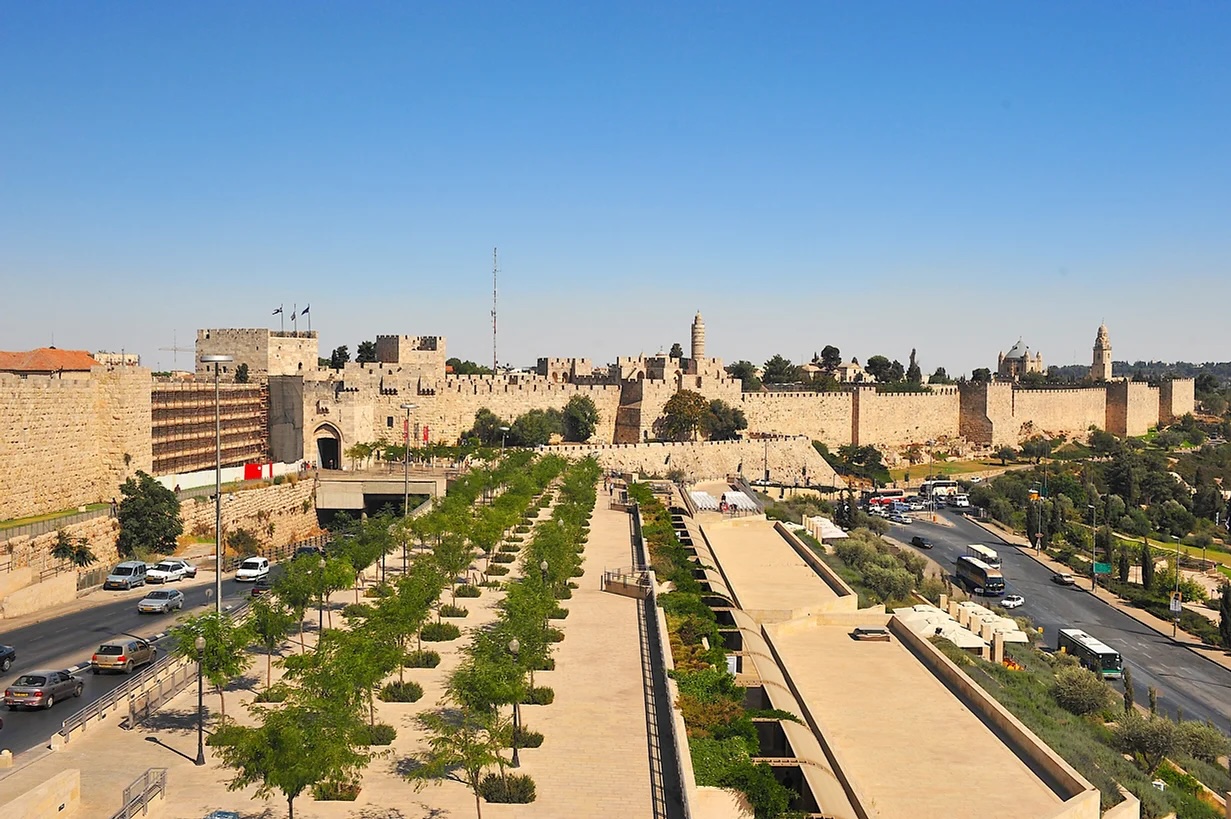
Old Walls, Jerusalem, 2009
All images © Zion Ozeri. All Rights Reserved.
Opening
Before showing the photograph, ask students:
Imagine you're founding a new country. You can choose any city as your capital. Do you build a brand-new capital, or choose a city with thousands of years of history? Why?
Take a few quick answers, then reveal the photograph.
Part 1: Reading the Photograph
Look closely at this photograph and discuss:
- What clues in the picture tell you that this photo was taken in recent times? What clues or remnants from the past do you notice?
- Israel's modern capital city, Jerusalem, was built on the site of the ancient city where King David ruled. What do you think it feels like to live in a city that has both modern and ancient elements? Why do you think Israel chose to place its modern capital city on the site of the ancient capital?
- The ancient city of Jerusalem was a logical location for a capital because it sat on high ground and was centrally located. What do you think makes a good capital city today? Do you see any of those same qualities — visibility, centrality, defensibility — reflected in this photograph?
- Look at the traffic, the modern city street lamps, and the ancient walls in the same frame. What do you think the photographer wanted us to notice by capturing both in one shot?
Learn more about the city of Jerusalem:
Jerusalem: An Introduction | Jewish Virtual Library
Jerusalem | My Jewish Learning
Part 2: The Text
Read the following text from the book of Samuel. The prophet Natan has been sent by God to speak to King David, delivering instructions about his kingship.

II Samuel 7:8
Further, say this to My servant David: Thus said the LORD of Hosts: I took you from the pasture, from following the flock, to be ruler of My people Israel.
Discuss:
- Why do you think it could be important for a group of people to have a single ruler in charge, rather than making every decision collectively?
- David was just a shepherd before he was elevated to king. Why might a shepherd, of all people, make a good king? What skills might carry over?
- If you were made a leader today — of your school, your community, or something bigger — what would your top priorities be? How would you actually lead, day to day?
- Israel today is governed as a democracy. Why do you think a single all-powerful king is no longer how most modern nations — including Israel — choose to govern? What do you see as the benefits of democratic government?
Read more about King David:
King David - Jewish Virtual Library
How King David Ascended to the Throne of Israel - National Geographic
Part 3: Synthesis
Revisit the photograph and the text side by side.
- King David’s Jerusalem was a fortified city, protected by walls. Thousands of years later, walls still surround the Old City. The walls standing today were built much later, but walls have always served many purposes: to protect, separate, define, or contain. What walls do you, your community, or your society build today, literal or otherwise? What purpose do they serve?
Follow-Up Activities
1. Old Meets New
Take a photograph that combines old and new elements in an interesting way. You can define "old" and "new" however you'd like — it doesn't have to mean ancient. What ideas or feelings can you evoke by combining the two in a single frame?
2. Portrait of a Leader
Interview and photograph someone you consider a leader. As you compile a visual and written profile, think about:
1. What makes this person a leader?
2. What leadership qualities do they possess?
3. Who do they lead?
4. How do they lead?
5. What are the biggest challenges they face as a leader?
Then think carefully about how you'll depict this person in a photograph to emphasize their leadership: What setting will you choose? How will you pose them? What clothing or props might reinforce their role?