The content and images in this curriculum and presentation are copyrighted and trademarked. Photographs’ subject matter is divided into categories. All photographs are by Zion Ozeri. You may only use the presentation or parts of it while implementing the DiverCity Lens in your school. For any other use, including reproduction, you must get special permission from Zion Ozeri. The use of the following content, which may be objectionable, is at your own risk, and Zion Ozeri holds no responsibility to evaluate the accuracy, completeness, and usefulness of any content provided, prior to your use. You may contact Zion Ozeri for any questions: zion@zionozeri.com
Tragedy and Memory
Extra-Curricular Lesson Plan | Grades 7–12 | by Zion Ozeri, edited by Dara Unterberg
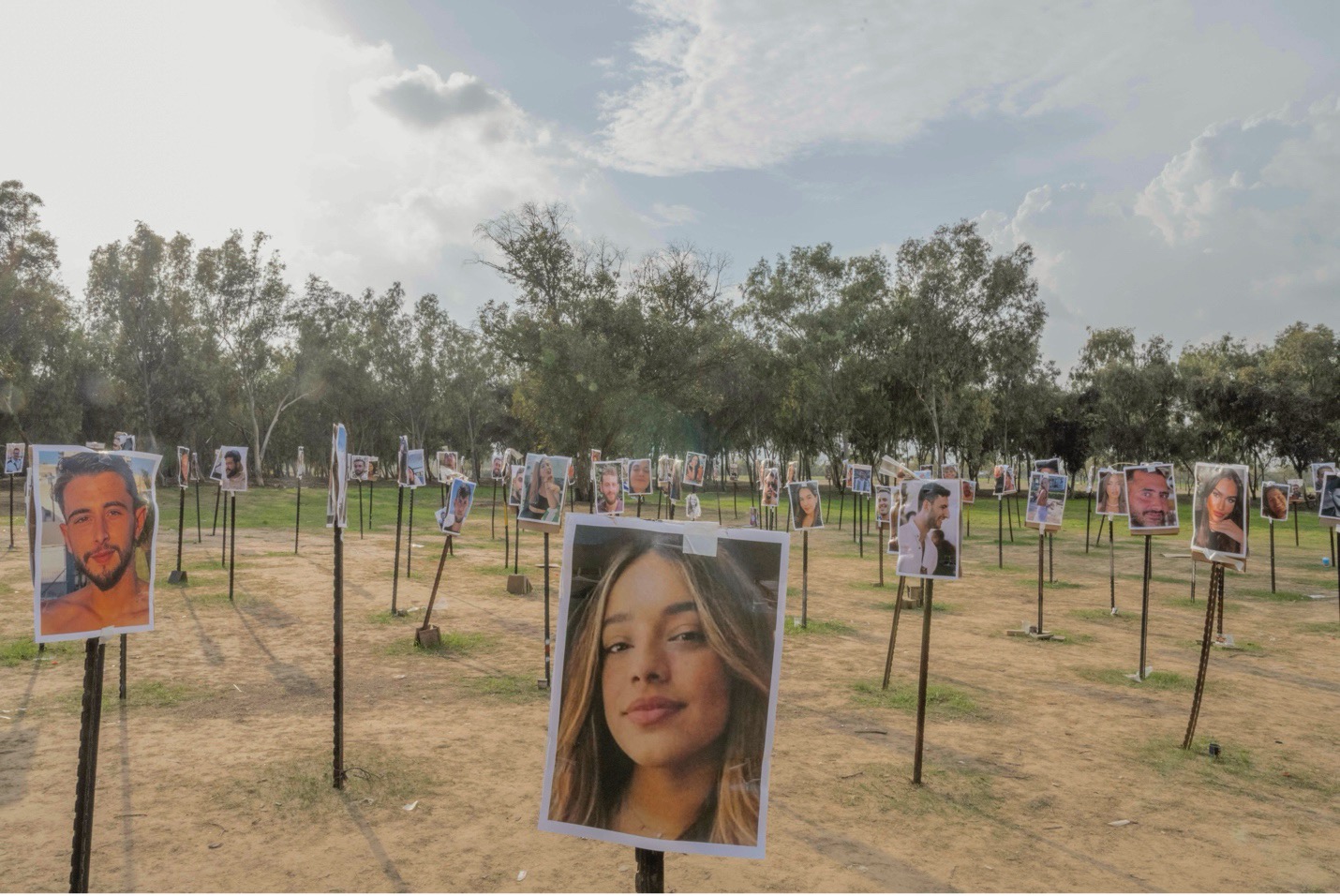
Nova Concert Memorial, Kibutz Reim, October 7, 2023
All images © Zion Ozeri. All Rights Reserved.
Opening
Before showing the first photograph, ask the following question:
When people are killed in a tragedy, what gets lost when we remember only the event and not the individual people?
Take a few responses, then project the Nova memorial photograph without the caption and give students time to look.
Then ask: How does this memorial make it difficult to see this only as “October 7” or “the Nova massacre”?
Part 1: Reading the Photographs
Photograph One: Nova Concert Memorial
Look closely at the photograph and discuss:
- Where does your eye go first? What in the photograph draws it there?
- Notice the placement and repetition of the portraits. What effect does seeing so many individual faces together have?
- Why might Ozeri have chosen to photograph the memorial from this position, with one portrait close to us and many others receding into the distance?
- Look beyond the portraits at the trees, grass, sky, and open space. How does the ordinary, natural setting affect the way you experience the memorial?
- What does the photograph communicate about the people being remembered that a photograph of the memorial as a whole, taken from farther away, might not?
Learn more:
October 7 was the deadliest day for Jews since the Holocaust. | CNN
Nova Music Festival | Rolling Stone
Nova massacre survivors return to site on one year anniversary| Israel | The Guardian
Photograph Two: The Anne Frank School
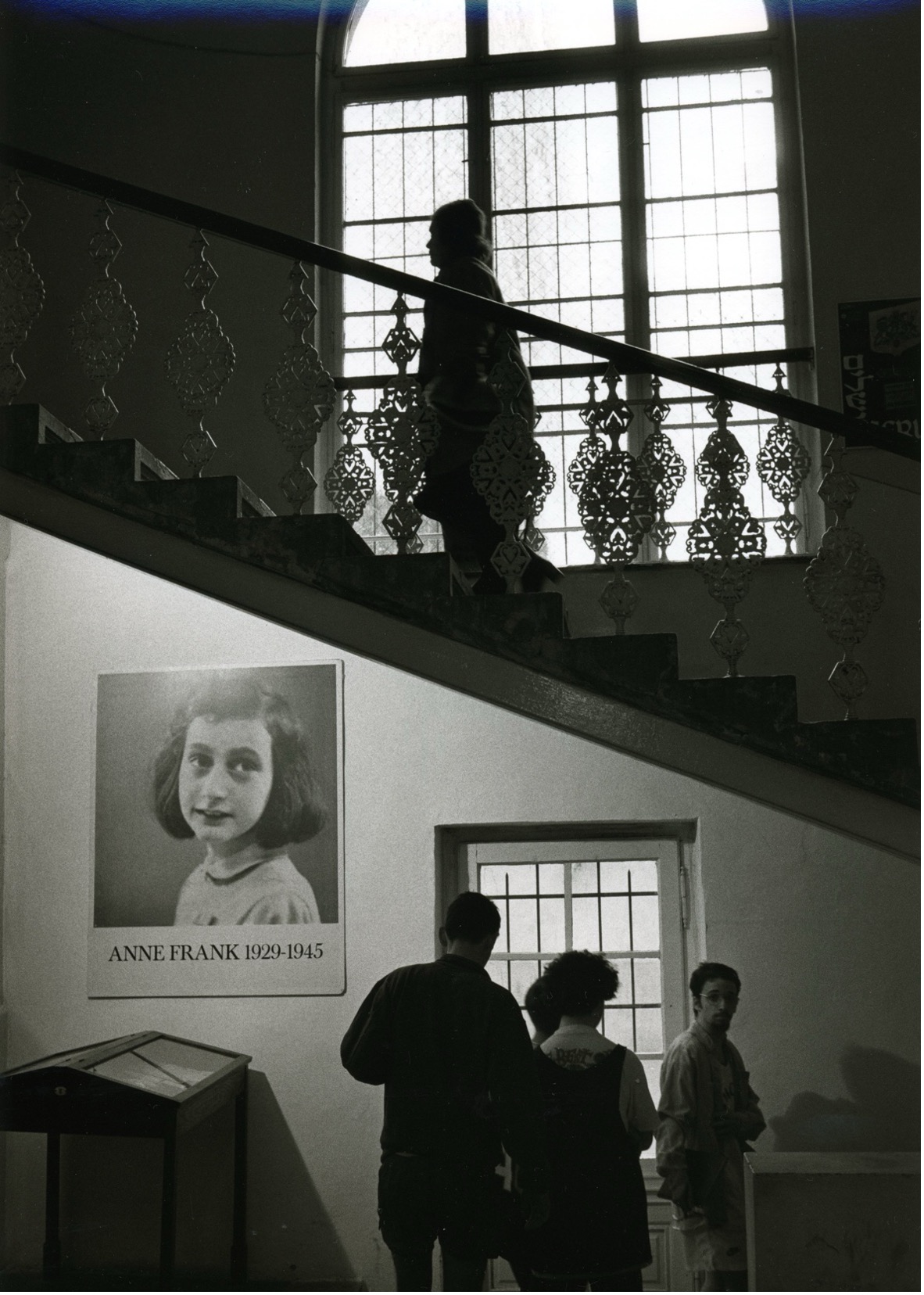
The Anne Frank School, Budapest, Hungary, circa 2001
All images © Zion Ozeri. All rights reserved.
Look closely at this photograph and discuss:
- What do you notice? What stands out to you? What does it make you think of? How does it make you feel?
- What do you know about Anne Frank?
- What can you gather about her from the photograph?
- Why do you think the creators of this school wanted to name it after Anne Frank?
- How does this photograph relate to the first one you looked at?
- Why do we memorialize people who have been killed? Why is it important to remember past suffering and tragic events like October 7th and the Holocaust?
- What helps you remember important events in your own past?
Learn more:
Anne Frank | Biography, Age, Death, & Facts | Britannica
Who was Anne Frank? | Anne Frank House
Part 2: The Text
Text 1: In the City of Slaughter
The following poem was written in Hebrew in 1904 by the poet Hayim Nahman Bialik, in response to the Kishinev pogrom of 1903, in which dozens of Jews were murdered and hundreds more injured over two days of violence.
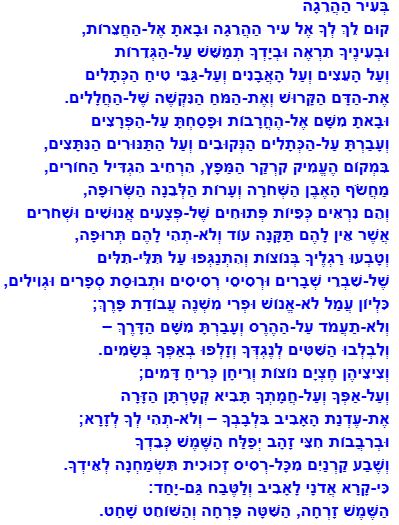
"In the City of Slaughter"
Rise, go forth to the city of slaughter, and enter its courtyards.
With your own eyes you shall see, and with your own hands you shall feel,
upon the fences, upon the trees, upon the stones, and upon the plastered walls,
the clotted blood and the hardened brains of the slain.From there you shall go to the ruins,
stepping across the breaches, passing by walls riddled with holes
and shattered ovens.
Where the blast struck deep, gouging and widening the holes,
laying bare the blackened stone and exposing the scorched brick,
they gape like the open mouths of mortal, blackened wounds,
wounds beyond repair, for which there can be no cure.Your feet shall sink into feathers
and stumble over heaps upon heaps of shattered fragments,
splinters upon splinters,
the wreckage of books and sacred scrolls:
the ruin of what had been built through almost superhuman labor,
the fruit of redoubled, backbreaking toil.But do not linger over the wreckage; pass on from there, out to the road.
And the acacias shall blossom before you
and pour their fragrance into your nostrils.
Their blossoms are half feathers, and their scent is like the scent of blood.
And despite yourself, despite your fury,
their strange incense will carry the sweetness of spring into your heart,
and you will not find it hateful.With myriads of golden arrows the sun will pierce your heart,
and sevenfold rays from every shard of glass
will rejoice over your calamity.For the Lord has summoned spring and slaughter together:
The sun shone,
the acacia blossomed,
and the slaughterer slaughtered.
Discuss:
- Which line or lines move you the most? Why?
- The poem describes both physical destruction and, cruelly, spring blooming right alongside it. Why might a poet choose to include both in the same lines?
Text Two: Anne Frank's Diary
Below are some quotes from the diary Anne Frank kept while she and her family hid from the Nazis in Amsterdam between 1942 and 1944.
Whoever is happy will make others happy too.
In spite of everything, I still believe that people are really good at heart.
I don't think of all the misery, but of the beauty that still remains.
Memories mean more to me than dresses.
- Which quote, or quotes, do you relate to the most? Why?
- Anne Frank wrote these words while in hiding, without knowing how her story would end. Does knowing that change how you read them?
Part 3: Synthesis
- The Nova memorial and the Bialik poem are separated by 120 years, but both mark a massacre of Jews. The Anne Frank school and her diary are separated by decades, but both preserve the memory of a single, named life. What is the difference between memorializing a mass tragedy and memorializing one person within it?
- Bialik wrote out of anger, commanding the reader to touch the blood and see the wreckage. Anne Frank wrote, in hiding, that people are “really good at heart.” Both are responses to catastrophe. Can grief and hope be equally honest reactions to the same kind of horror?
- Why do you think this lesson pairs a massacre from 2023 with a massacre from 1903, and a Holocaust victim's diary with both? What does placing these tragedies next to each other, rather than teaching them separately, help you understand?
Follow-up Activity
Create a Memorial Photograph
Choose a person from the past who you think should be remembered. This person can be from Jewish history, world history, your community, or your family.
Take a photograph that helps tell something important about that person. You might photograph a place, object, activity, or other detail that connects to the person or helps show why they should be remembered.
Give your photograph a title. Then write 2–3 sentences explaining:
- Who are you remembering, and why?
- Why did you choose to take this particular photograph?
- What does the photograph help us understand or feel about this person?