The content and images in this curriculum and presentation are copyrighted and trademarked. Photographs’ subject matter is divided into categories. All photographs are by Zion Ozeri. You may only use the presentation or parts of it while implementing the DiverCity Lens in your school. For any other use, including reproduction, you must get special permission from Zion Ozeri. The use of the following content, which may be objectionable, is at your own risk, and Zion Ozeri holds no responsibility to evaluate the accuracy, completeness, and usefulness of any content provided, prior to your use. You may contact Zion Ozeri for any questions: zion@zionozeri.com
Balfour Declaration
Lesson plan | Grades 7–12 | by Zion Ozeri and Dara Unterberg
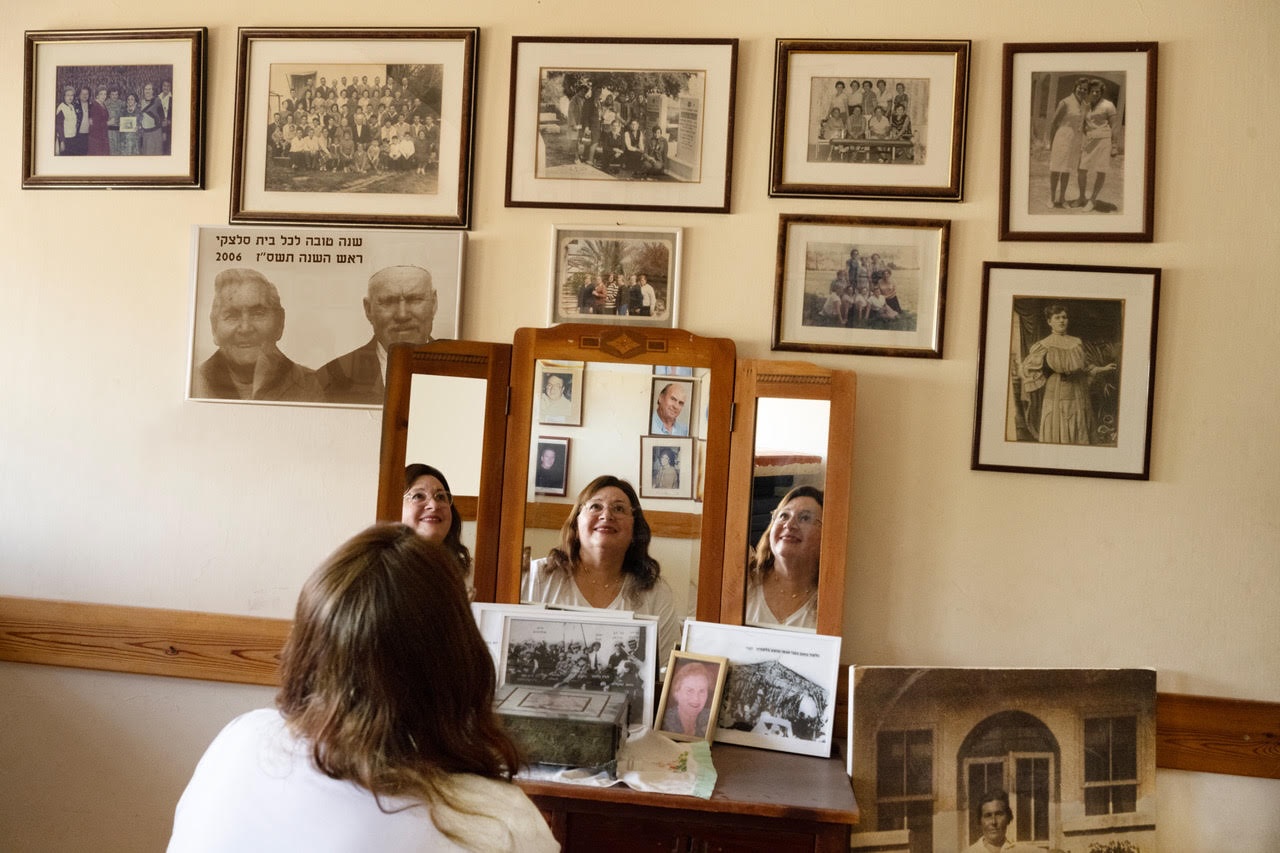
Reflections on Belonging, Balfouria, Israel 2026
All images © Zion Ozeri. All Rights Reserved.
Part 1: Reading the Photograph
Efrat Solomon carries the story of her ancestors, Mordechai and Hanna Seletzki, who fled with their parents, the pogroms of Russia and found safety in America. But safety was not enough. In 1924, they left the comfort of the United States behind and set out with their children to help build the nascent Jewish homeland, then under British rule. They settled in Balfouria, a young farming community named in honor of Lord Balfour, whose 1917 Declaration first recognized the Jewish people's right to a national home in the Land of Israel.
A year later, in 1925, that history arrived at their doorstep. Lord Balfour himself, visiting the land then under British rule, was welcomed as a guest into Mordechai and Hanna's home. A pioneering family hosted the very statesman whose declaration had helped make their new life possible.
In his will, Mordechai wrote that this home should always stay in the family. Indeed, the house still stands today. More than a century later, it remains a living monument to the pioneers who chose not just to find safety, but to build a homeland for the Jewish people. (To learn more about the Seletzki family’s story, click here.)
Study the photograph again and discuss:
- Why did the photographer choose “Reflections on Belonging” as the title of the photograph?
- What feelings does the photograph evoke now that you know who and what you are looking at? Did knowing the story change the way you see it?
- What do you wish you knew about your own ancestors’ lives?
- If you could ask them one question about where they lived, the choices they made, or the world they experienced, what would you ask?
Part 2: The Text
On November 2, 1917, British Foreign Secretary Arthur James Balfour sent a short letter to Lord Rothschild, a leader of the British Jewish community. That single-paragraph letter — now known as the Balfour Declaration — became the first formal recognition by a major world power of the Jewish people's right to a national home in the Land of Israel. It was this declaration that Balfouria, the farming community the Seletzki family helped build, was named for.
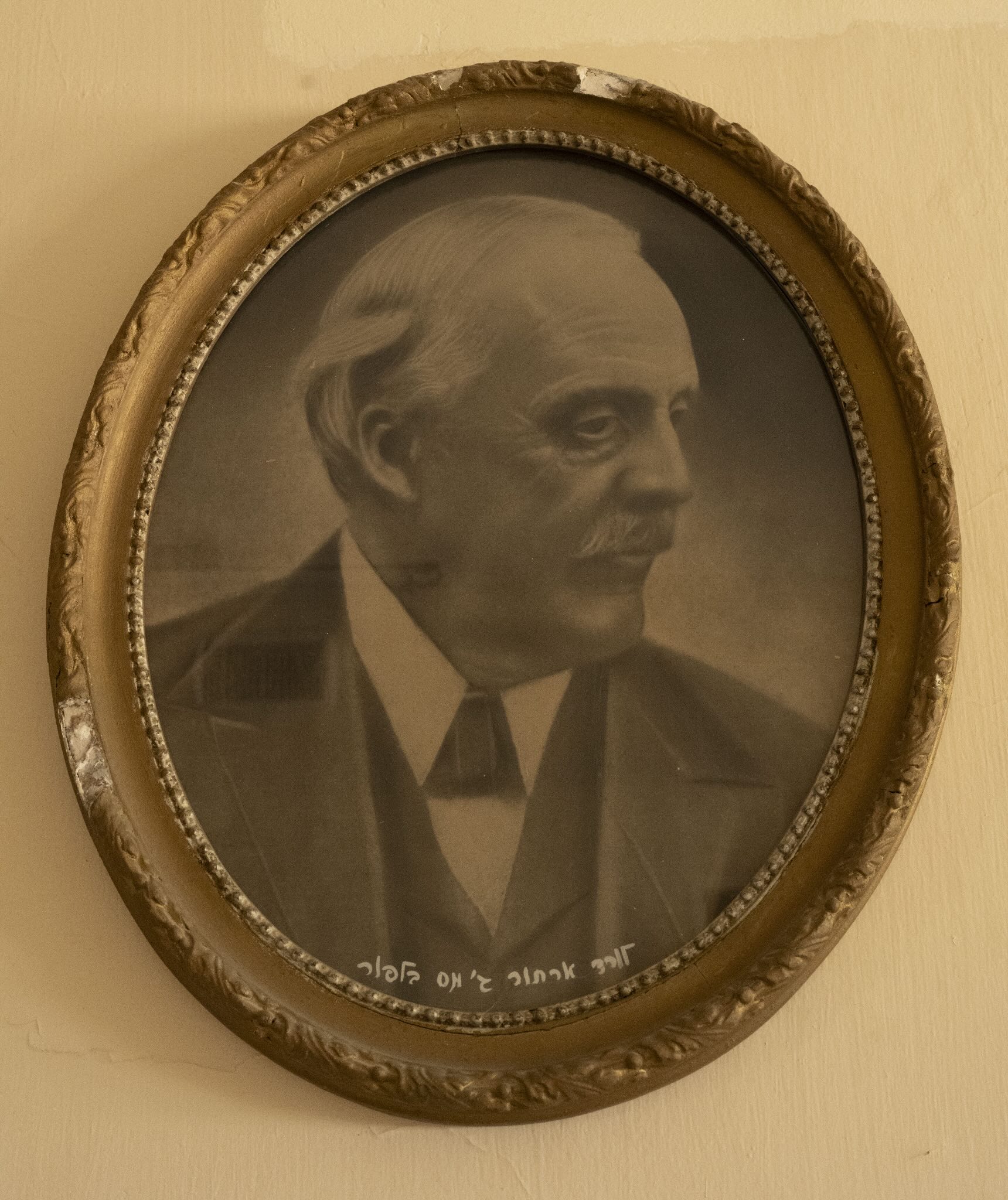
Arthur Balfour
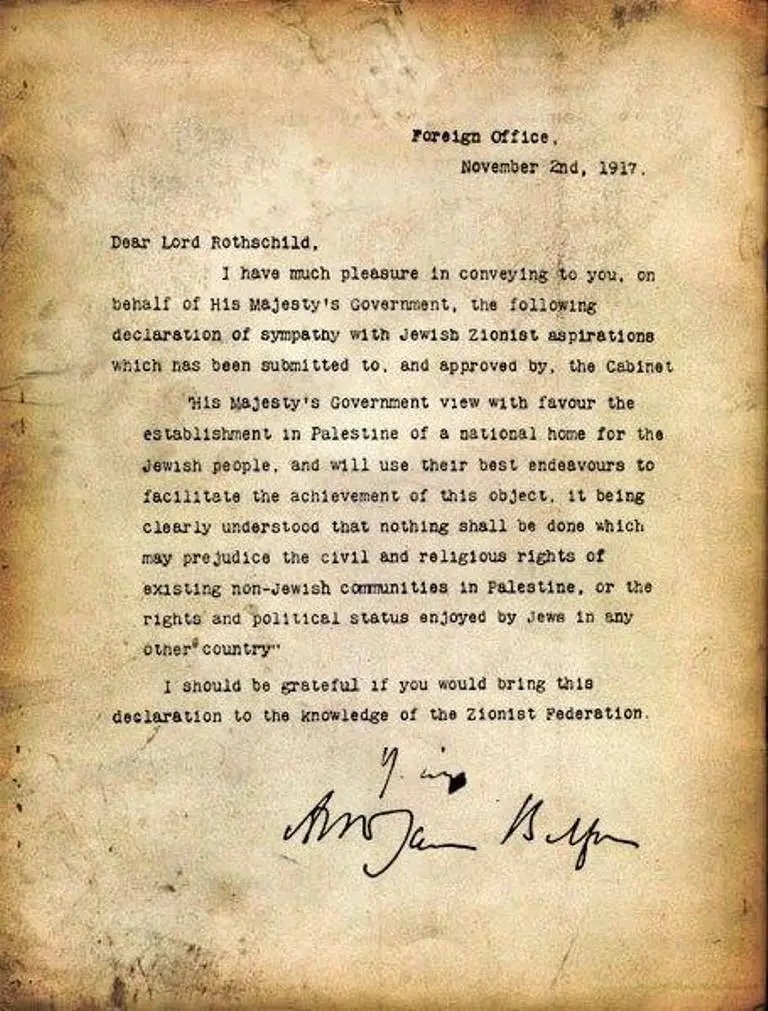
The Balfour Declaration
The Balfour Declaration - National Library of Israel
Discuss:
- On whose behalf did Balfour write this declaration? Who ultimately was the declaration intended for?
- What does the letter say about the British Empire’s intentions for “Palestine”?
(The Roman Empire, after crushing the Bar Kokhba revolt and inflicting massive Jewish casualties in 135 CE, renamed the province from "Judea" to "Syria Palaestina," after the ancient Philistines, who were unrelated to the Jewish population and foreign to the area, in an act widely understood as an attempt to erase the Jewish connection to the land.)
- How do you understand the phrase “a national home for the Jewish people”? What do you think it meant in this context? What does it mean to you today?
- What do you think he meant when he wrote “nothing will be done which may prejudice the civil and religious rights of existing non-Jewish communities in Palestine”?
- What challenges do you think still laid ahead for the British and the Jewish people in their endeavor?
Learn more about the Balfour Declaration here:
- The Balfour Declaration - Israel Ministry of Foreign Affairs
- Balfour Declaration - History.com
- Arthur Balfour - Jewish Virtual Library
Part 3: Synthesis
- The declaration promised a “national home” without defining its borders, its government, or how it would be built. Mordechai and Hanna Seletzki built an actual home, with an actual address, that still stands today. What did it take to turn an abstract political phrase into four walls and a roof?
- A declaration, a photograph, and a family's oral history are three different kinds of records. What does each preserve that the others risk losing?
Follow-Up Activities
1. A Photograph From the Family Archive
Find an old family photograph (preferably at least twenty to thirty years old). If you don't have one available, take a photograph of a meaningful family object or place that connects you to your family's story. Then write a short paragraph answering:
- Who or what is shown in the photograph?
- What do you think was happening at the moment this picture was taken?
- What details in the photograph tell a story — clothing, location, expressions, objects, surroundings?
- What does this photograph teach you about where your family comes from?
- How does it impact your appreciation for your family’s story?
2. A Letter to the Future
Take a photograph of something you want your family to remember, and write a letter to a future descendant fifty or a hundred years from now that includes:
- What you want them to know about your life today
- What values you hope your family continues to carry
- What stories from your generation should not be forgotten
Efrat Solomon, with her siblings, carries the story of generations in her blood, a story that begins during a period of pogroms, including the infamous 1903 Kishinev pogrom, that shook the Jewish world and sent so many families fleeing for their lives. Among them was the Seletzki family, who gathered their children and left everything behind, arriving in Chester, Pennsylvania, USA, in search of safety and a future.
It was their son, Mordechai, who would carry the family's story forward. In 1908, he married Hanna Manski, and together they began a new chapter. They had built a life in America, with safety, stability, and a secure future. And yet, in 1924, Mordechai and Hanna chose to leave that comfort behind. Together with their six daughters, they set out for Balfouria, a young farming community freshly named in honor of Lord Balfour himself, to help build and settle the nascent Jewish ancestral homeland. In Balfouria, they had four more daughters.
A year later, in 1925, history came knocking at their door, quite literally. Lord Balfour, on a visit to the land still under British rule, was welcomed as a guest into Mordechai and Hanna's own home. Imagine that moment: a farming family, not so many years removed from fleeing pogroms in Russia, now hosting the very man whose name graced the community they helped build.
That home still stands today. And it stands not by accident, but by design. Mordechai and Hanna raised only daughters, and perhaps it was this that made Mordechai hold so tightly to the family's name, determined that it would not fade with him. In his will, he made sure the Seletzki name would carry on. He decreed that the house should never be sold, that it should remain, for all time, a place where his descendants, now numbering almost five hundred, could return, gather, and remember where they came from.
Today, that home is more than a building. It's a living thread connecting generations, from the pogroms in Russia, to a farm in Balfouria, to Efrat Solomon and her siblings, now watching their own grandchildren grow into the family's story. Six generations after Mordechai and Hanna Seletzki, the thread holds, still gathering, still remembering, still carrying the story forward.
And now, the descendants are writing the next chapter of that promise. United across generations, they have launched a campaign, raising funds among family and friends alike, to restore the old home so that it may open its doors once more. Not just as a place for the Seletzki family to gather, but as a living witness to history, where anyone can come, stand where Lord Balfour once stood, and see for themselves how one family's flight from persecution became a legacy of resilience, memory, and home.