The content and images in this curriculum and presentation are copyrighted and trademarked. Photographs’ subject matter is divided into categories. All photographs are by Zion Ozeri. You may only use the presentation or parts of it while implementing the DiverCity Lens in your school. For any other use, including reproduction, you must get special permission from Zion Ozeri. The use of the following content, which may be objectionable, is at your own risk, and Zion Ozeri holds no responsibility to evaluate the accuracy, completeness, and usefulness of any content provided, prior to your use. You may contact Zion Ozeri for any questions: zion@zionozeri.com
Second Temple Period
Lesson Plan | Grades 7–12 | by Zion Ozeri and Josh Feinberg
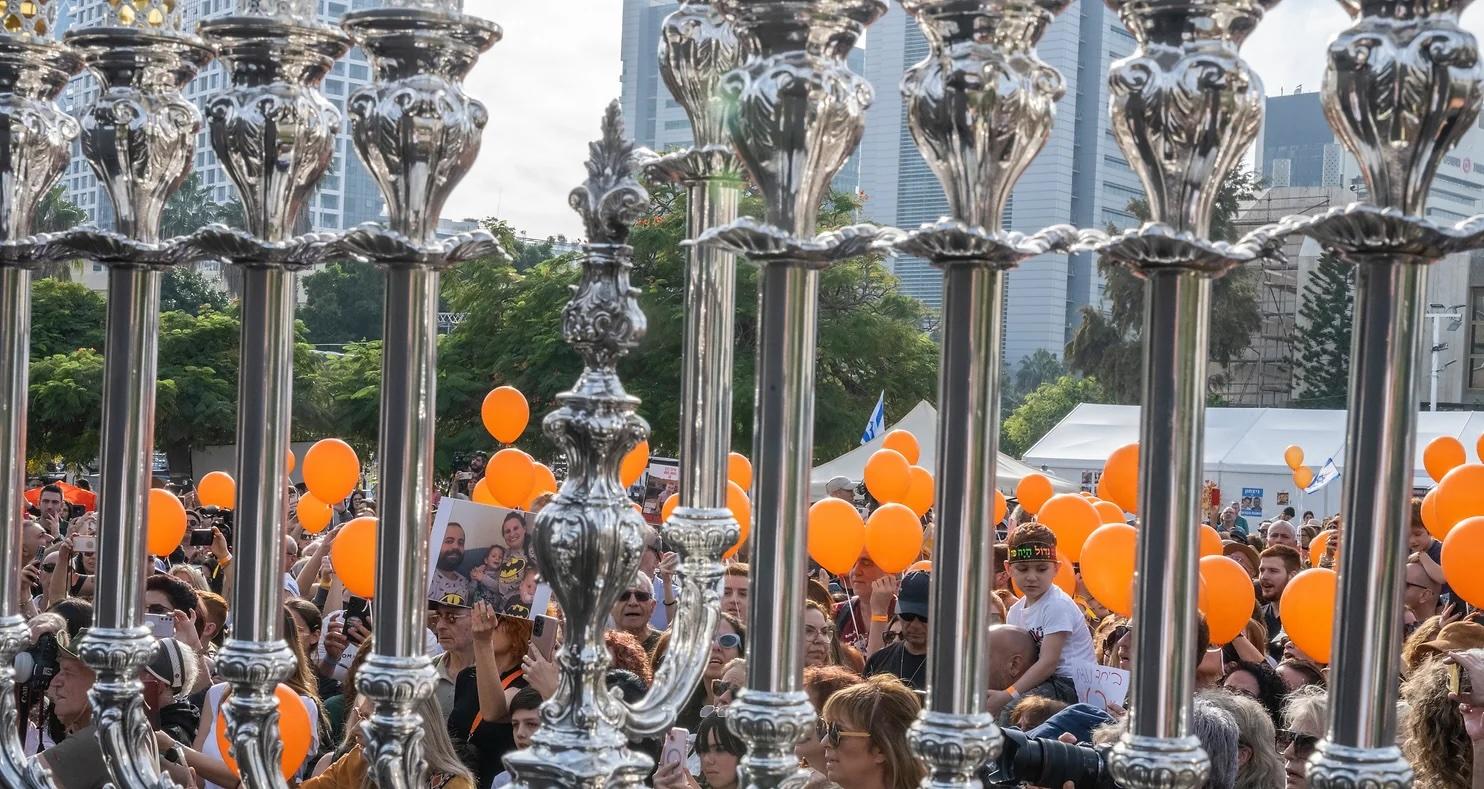
Nes Gadol, Chanukah, Hostage Square, Tel Aviv, Israel
All images © Zion Ozeri. All Rights Reserved.
Opening
Look at this photograph silently.
Imagine that this moment is connected to a much larger story that began before this picture was taken.
Share something that you think might belong in that story.
Part 1: Reading the Photograph
Look closely at the image and discuss:
- What do you think is happening here? How would you describe this scene?
- What are some of the things that stand out for you? What details do you notice?
- What choices did the photographer make about how to shoot this photograph and from where?
- The vertical metal bars through which the photo was taken are the branches of a large Hanukkah menorah. How does that knowledge affect your reading of the photograph?
- What does the holiday of Hanukkah mean to you?
- The events of Hanukkah happened more than 2,000 years ago. Why do we still celebrate the holiday today?
- The photographer chose to include the boy on his father's shoulders on the right. Why might he have wanted that in the photo?
- On the left, someone holds up a photograph of a family who was murdered in the terrorist attacks of October 7, 2023. The photo was taken in Tel Aviv's Hostage Square, a gathering place to advocate for the release of the Israelis kidnapped on October 7, 2023. Why might the photographer have chosen to include that detail? How does it relate to the celebration of Hanukkah?
Learn More: Hostage Square - Wikipedia
Part 2: The Text
Ezra was a scribe and a Jewish leader, and the book that describes his activities is part of the section of the Hebrew Bible called Writings. The passage below describes the beginning of the rebuilding of Jerusalem and the Temple, in the sixth and fifth centuries BCE.

Ezra 1:1-3
(1) In the first year of King Cyrus of Persia, when the word of the LORD spoken by Jeremiah was fulfilled, the LORD roused the spirit of King Cyrus of Persia to issue a proclamation throughout his realm by word of mouth and in writing as follows: (2) Thus said King Cyrus of Persia: The LORD God of Heaven has given me all the kingdoms of the earth and has charged me with building Him a house in Jerusalem, which is in Judah. (3) Anyone of you of all His peoplemay his God be with him, and let him go up to Jerusalem that is in Judah and build the House of the LORD God of Israel, the God that is in Jerusalem.
Discuss:
- How do you imagine the Jewish people responded to the offer that Cyrus made?
- Why do you think it was important for the Jews to have a central place — a House of God — where they could gather for worship?
- This second Temple — the one about to be built in these verses — was later defended and rededicated by the Maccabees in the events of Hanukkah. Why do you think it was so important for the Maccabees to defend it? Why do we still remember that today?
- What connections do you notice between this ancient rebuilding and the world of the photograph?
- Is there a central spot in your life today that connects you to your Jewish identity? If so, what is it?
Text 2: Antiquities of the Jews 12.7.7
This next text was written by Flavius Josephus, a Roman-Jewish historian and military leader who lived in the first century CE. It describes the first celebration of Hanukkah by the Maccabees, after they defeated the Greeks and recaptured the Temple.
Now Judas celebrated the festival of the restoration of the sacrifices of the temple for eight days; and omitted no sort of pleasures thereon: but he feasted them upon very rich and splendid sacrifices; and he honored God, and delighted them, by hymns and psalms. Nay, they were so very glad at the revival of their customs, when after a long time of intermission, they unexpectedly had regained the freedom of their worship, that they made it a law for their posterity, that they should keep a festival, on account of the restoration of their temple worship, for eight days. And from that time to this we celebrate this festival, and call it Lights. I suppose the reason was, because this liberty beyond our hopes appeared to us; and thence was the name given to that festival.
Discuss:
- How did the Maccabees celebrate?
- What's similar or different about our celebration of the holiday today? Why do you think it has changed?
- Why do you think they made it a law for their posterity to mark the festival? Why do we celebrate Hanukkah even though the Temple no longer exists?
- Why does Josephus suppose the holiday was called "Lights"? What does the name "Festival of Lights" mean to you?
Learn more:
The History of Hanukkah | My Jewish Learning
The Hanukkiah (Hanukkah Menorah) | My Jewish Learning
The Maccabees/Hasmoneans: History & Overview- Jewish Virtual Library
The Cyrus Cylinder and Ancient Persia: A New Beginning
Part 3: Synthesis
Revisit the photograph and the text side by side.
- The Josephus text says the holiday was named for “a liberty beyond our hopes.” Where do you see hope for liberty in the photograph? Where do you see its absence, or its cost?
- Photography and ancient text are two very different ways of preserving memory. What can a photograph taken in 2023 capture about Hanukkah that a 2,000-year-old text cannot? What can the ancient text capture that the photograph cannot?
Follow-Up Activities
1. Photographic Reframing
Take a photograph that incorporates a significant or meaningful object in an unusual way, the way this photograph frames the scene through the branches of a menorah. Share it with the group.
2. A New Hanukkah Custom
Write a prayer or poem, invent a ritual, or create a new custom that incorporates modern events into the celebration of Hanukkah. How will you integrate the memory of the past with the experience of the present?
3. What Would You Fight For?
Is there anything you would be willing to risk your life for? How far would you go? Write a reflection on this topic and share with the group.